ADU Construction Requirements: Central Valley Guide
Table of Contents
- What You Need to Know About ADU Construction Requirements
- ADU Zoning Benefits for Small Lots
- Size Limits, Setbacks, and Parking Regulations
- ADU Permit Process in San Joaquin County
- ADU Construction Timeline: What to Expect
- Fire Safety, Building Code, and Utility Requirements
- Hiring a Licensed ADU Contractor
- Key Considerations: Owner-Occupancy, Property Tax, and Financing
- Frequently Asked Questions
Last Updated: October 4, 2026
What You Need to Know About ADU Construction Requirements
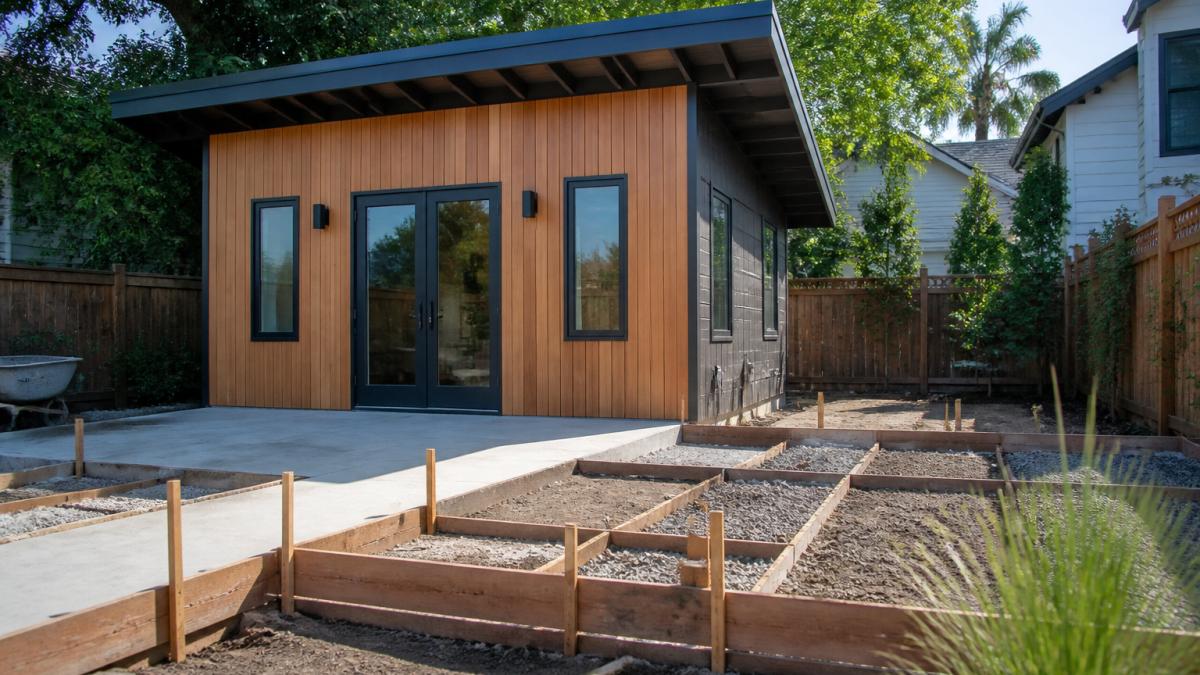
An accessory dwelling unit (ADU) is a secondary residential structure on a single-family residential lot, separate from the primary home. ADUs can be attached to the main house, built as detached structures, or created by converting existing space.
State law now requires local agencies to approve ADUs that meet specific criteria. However, the Central Valley has its own considerations: soil conditions, climate, utility infrastructure, and local building department practices all affect your timeline and approach.
The difference between a smooth approval process and a frustrating one often comes down to understanding the requirements upfront and working with a contractor who knows the local building department's expectations.
ADU Zoning Benefits for Small Lots
State law now allows ADUs on single-family lots even in areas that historically banned them, giving homeowners with undersized lots a realistic path forward.
You can build an ADU without subdividing your property, avoiding the cost and complexity of a full parcel split while retaining ownership of both units.
State law allows ADUs on lots as small as 1,200 square feet in some jurisdictions, with no minimum lot size in others.
Zoning benefits apply only if your ADU meets specific criteria. An ADU that exceeds size limits, violates setback requirements, or fails to meet utility standards loses state protection and reverts to local discretionary review.
Size Limits, Setbacks, and Parking Regulations
Square Footage and Height Restrictions
The maximum unit size for an ADU depends on whether it's attached or detached and whether it's a junior ADU (a smaller, efficiency-style unit). State law sets these limits, but local agencies can impose stricter standards.
Detached ADUs are capped at 1,200 square feet. Attached ADUs can be up to 50% of the primary dwelling's square footage or 800 square feet, whichever is smaller. Junior ADUs (efficiency-style units) are capped at 500 square feet.
Height restrictions generally cap ADUs at 35 feet or the height of the primary dwelling, whichever is lower. Most Central Valley lots can accommodate a two-story ADU, though single-story primary homes may limit your design options.
Setback Requirements
Typical setback requirements for detached ADUs are 5 feet from the side and 15-20 feet from the rear. Attached ADUs often follow the same setbacks as the primary dwelling.
In the Central Valley's older neighborhoods, setback requirements can be the limiting factor in ADU placement. A contractor experienced with local zoning can assess your lot and identify design constraints.
Parking Exemptions
State law exempts many ADUs from parking requirements (Bill Text). If your ADU is within a half-mile of public transit, no additional parking is required. In transit-poor areas, you may need one parking space.
In San Joaquin County, many jurisdictions have adopted parking exemptions for ADUs under 750 square feet. Check your specific municipal code, as exemptions vary by city.
You can use shared driveway access if the site plan allows, making ADUs feasible on lots where a separate drive would be impossible.
ADU Permit Process in San Joaquin County
Most San Joaquin County jurisdictions use a simplified, ministerial approval process for compliant ADUs, meaning the building department cannot deny your application if you meet all requirements.
Start with a pre-application meeting. Bring your lot survey, a sketch of your proposed ADU, and questions about local requirements. The building department will clarify which standards apply and what documents you'll need.
Submit a complete application with architectural plans, a site plan, utility connection details, and proof of property ownership.
A licensed contractor familiar with local requirements will know which details the building department scrutinizes and how to format submissions to local standards.
ADU Construction Timeline: What to Expect
An ADU construction timeline in the Central Valley typically spans 6-9 months from permit approval to move-in. Permitting takes 4-8 weeks; construction takes 3-5 months for a detached ADU or 2-3 months for an attached unit or conversion. Final inspection takes 1-2 weeks.
Delays typically stem from utility coordination, weather, or unforeseen site conditions discovered during excavation.
Add 20-30% to your contractor's timeline estimate to account for permit delays, material lead times, and unforeseen issues.
Fire Safety, Building Code, and Utility Requirements
Your ADU must comply with the California Building Code, which includes fire-rated construction, sprinkler systems, and egress requirements.
Most ADUs require fire sprinklers. Some jurisdictions exempt detached ADUs under 750 square feet if they're more than 50 feet from the primary dwelling.
Your ADU must have at least two independent exits or one exit plus a secondary emergency escape window. This affects room layout, particularly for smaller units.
If your lot has existing sewer and water lines, connecting the ADU is straightforward.
Request a Project Consultation →
Most ADUs require a separate electrical meter and coordination with your utility provider. In the Central Valley, summer cooling loads may require upgrades to your service entrance.
Hiring a Licensed ADU Contractor
Ask about their ADU experience in San Joaquin County, references from recent projects, and relationships with local building departments.
Verify that your contractor is licensed as a general contractor or builder in California.
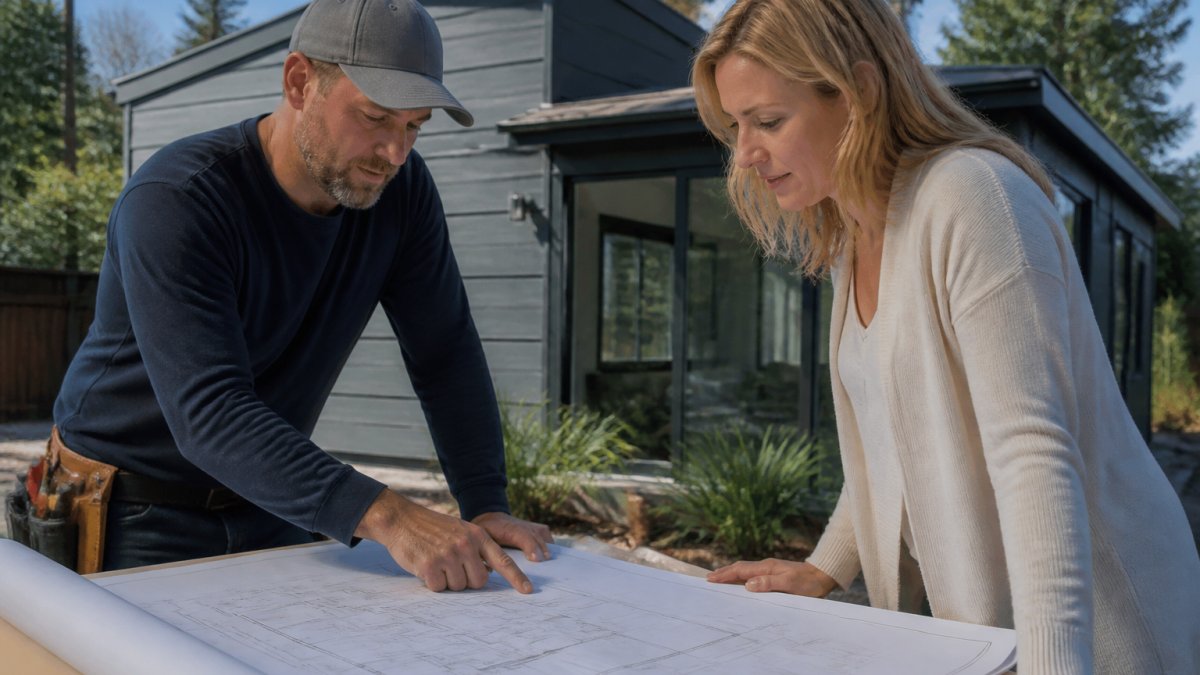
Clarify whether the contractor will handle permitting or if you'll hire a separate architect.
Ask about their timeline estimate and what could delay the project.
Discuss how change orders are handled. A contractor who can explain how changes are documented, priced, and approved will prevent surprises later.
Key Considerations: Owner-Occupancy, Property Tax, and Financing
Owner-Occupancy Requirements
State law requires that either the primary dwelling or the ADU be owner-occupied. One unit must be your primary residence. This requirement prevents speculation and preserves single-family zoning.
Owner-occupancy is verified at the time of occupancy and is enforceable by local agencies. Violating this requirement can result in fines and orders to remove the ADU. If your long-term plan includes renting both units, an ADU is not the right approach for your property.
Property Tax Reassessment Risks
Adding an ADU triggers a property tax reassessment in California. The county assessor will reassess your property based on the increased value from the new unit. This means your property taxes will likely increase after the ADU is completed and occupied.
The amount of the increase depends on your county's assessed value, the cost of the ADU construction, and local assessment practices. This is a real cost that should factor into your financial planning.
Discuss property tax implications with a tax professional or accountant before you start construction. Understanding the long-term tax impact helps you evaluate whether the ADU makes financial sense for your situation.
Financing Options for ADUs
Financing an ADU can be challenging because traditional lenders are unfamiliar with these units and view them as non-standard. However, several financing options exist:
Home equity loans or lines of credit use your home as collateral and are often the easiest option if you have sufficient equity. Rates are typically competitive and terms are flexible.
Construction loans are designed specifically for new construction. The lender disburses funds in stages as construction progresses.
ADU-specific loans are emerging from some lenders and credit unions. These products are designed specifically for ADU construction and may offer better terms than general construction loans.
FHA loans can sometimes be used for ADU construction if the primary home will be your primary residence. This option requires a conversation with an FHA-approved lender.
Financing costs vary widely based on your credit, equity, and the lender's familiarity with ADU projects. Get quotes from multiple lenders and compare terms carefully.
Adding an ADU to your Central Valley property is a realistic goal if you understand the requirements and work with experienced professionals. Whether your ADU includes a kitchen remodeling or bathroom remodeling to match your primary home's finishes, we handle the full scope: design coordination, permitting support, and construction management to ensure your project stays on schedule and meets all requirements. Start today with a consultation to discuss your specific lot, timeline, and goals.
| Requirement | Details | Local Variation |
|---|---|---|
| Maximum size (detached) | 1,200 sq ft | Check local code |
| Maximum size (attached) | 50% of primary or 800 sq ft | Varies by jurisdiction |
| Setbacks (side/rear) | 5 ft / 15-20 ft typical | Confirm with building dept |
| Height limit | 35 ft or primary dwelling height | Local caps vary |
| Parking requirement | Exempt if transit-accessible or under 750 sq ft | Check local code |
| Fire sprinklers | Required in most jurisdictions | Some exemptions for small detached units |
| Owner-occupancy | One unit must be owner-occupied | State-level requirement |
| Permit timeline | 30 days (ministerial) | 4-8 weeks typical in practice |
Frequently Asked Questions
What are the maximum square footage limits for an ADU in the Central Valley?
State law sets the maximum at 1,200 square feet for detached ADUs and 800 square feet for attached units (including junior ADUs). Local zoning ordinances in San Joaquin County may impose stricter limits. Check with your local agency before purchasing plans or starting design work, as requirements vary by jurisdiction within the region.
How close to the property line can I build an ADU?
Setback requirements determine how far your ADU must be from property lines. Typically, side setbacks range from 5 to 10 feet and rear setbacks from 15 to 20 feet, but these vary significantly by local zoning ordinance. Your ADU permit application will include a site plan showing all setback measurements. A licensed contractor can verify exact requirements before you finalize your design.
Do I need to live on the property to rent out my ADU?
Owner-occupancy requirements vary by location within San Joaquin County. Some jurisdictions require the owner to occupy either the main house or the ADU; others have eliminated this requirement entirely. Check your local building permit office or consult with a licensed ADU contractor familiar with your specific area to confirm current rules before proceeding.
What is the typical ADU construction timeline?
The full timeline includes permit application (4-8 weeks), approval (2-6 weeks), and construction (3-6 months depending on size and complexity). Attached ADUs and conversions are often faster than detached units. Weather, material availability, and inspection schedules can affect the schedule. A licensed contractor can provide a more precise estimate based on your specific project scope.
Are fire sprinklers required in ADUs?
Yes, fire sprinkler systems are generally required in new ADU construction under California building code. Conversions of existing structures may have different requirements depending on the work scope and local amendments. Your building permit application will specify exactly what fire safety measures apply to your project. This is a non-negotiable safety requirement.
Can I convert an existing garage into an ADU?
Yes, garage conversions are allowed and often faster than new construction. However, the converted space must meet all building code requirements for habitable space, including ceiling height, ventilation, egress (emergency exit), and utility connections. The conversion counts toward your ADU square footage limit. A licensed contractor can assess whether your garage is suitable for conversion.
How does property tax reassessment work when I build an ADU?
Adding an ADU typically triggers a property tax reassessment based on the increased property value. Your property tax bill may increase. Some homeowners use ADU rental income to offset this cost. Consult a tax professional or accountant before starting construction to understand the financial impact specific to your property and local assessment practices.
What should I look for when hiring an ADU contractor?
Verify the contractor holds a valid California builder's license, carries liability and workers' compensation insurance, and has specific ADU experience in San Joaquin County. Ask for references from recent ADU projects and confirm they understand current local zoning ordinances and building permit requirements. A licensed contractor should provide a detailed scope of work and timeline before you sign a contract.
