Licensed Electrician for Home Remodeling: A Practical Guide
Table of Contents
- Why You Need a Licensed Electrician for Home Remodeling
- How to Verify an Electrician's License and Credentials
- Electrician Questions to Ask Before Hiring
- Electrical Work During Home Renovation: What to Expect
- Understanding Electrical Permits for Home Remodeling
- Kitchen and Bathroom Electrical Upgrades
- Protecting Yourself: Licensing, Insurance, and Project Coordination
- Frequently Asked Questions
Last Updated: October 11, 2026
Why You Need a Licensed Electrician for Home Remodeling
When you're planning a kitchen or bathroom remodel, the electrical work isn't something to cut corners on. A licensed electrician for home remodeling brings expertise that protects your safety, ensures code compliance, and prevents costly mistakes down the road.
Home remodeling projects often expose problems with existing wiring that weren't visible before. Older homes, particularly those built in the 1970s or earlier, may have undersized electrical systems that can't handle modern appliance loads. A licensed electrician will identify these issues early and recommend upgrades before they become safety hazards.
Here's what makes this critical: electrical work done incorrectly can cause fires, equipment damage, and serious injury (CPSC Launches Program to Prevent Home Electrical Wiring System Fires). It also voids your homeowner's insurance if something goes wrong. When you hire a licensed electrician for home remodeling, you're getting someone trained to meet code requirements and work safely with high-voltage systems.
At Schatz Construction, we work with licensed electricians who understand the specific demands of kitchen and bathroom projects. They coordinate with our team to ensure electrical upgrades happen on schedule and integrate seamlessly with other remodeling work.
How to Verify an Electrician's License and Credentials
Before you hire anyone to touch your electrical system, verify their qualifications. This step protects you from unlicensed work and ensures the person doing the job actually knows what they're doing.
Start by asking for their license number. Every licensed electrician for home remodeling should carry a current state or local license. You can verify this through your state's licensing board or local building department. Most jurisdictions maintain online databases where you can search by name or license number and confirm the license is active and in good standing.
Ask for proof of insurance. A licensed electrician for home remodeling should carry both general liability insurance and workers' compensation insurance. This protects you if someone gets injured on your property or if damage occurs during the work. Request a certificate of insurance and verify it's current before work begins.
Check references from previous homeowners. Ask the electrician for at least three recent projects they've completed. Contact those homeowners and ask specifically about code compliance, timeline adherence, and whether the work passed inspection.
Look for any disciplinary history. Your state's licensing board can tell you if the electrician has had complaints filed against them or if their license has ever been suspended. This is public information and worth checking.
| Credential | What to Check | Where to Verify |
|---|---|---|
| Active license | Current status, license number | State licensing board or local building department |
| Insurance | General liability and workers' comp | Certificate of insurance from their insurance company |
| References | Previous residential projects | Direct contact with past homeowners |
| Disciplinary record | Complaints or suspensions | State licensing board public records |
Electrician Questions to Ask Before Hiring
Asking the right questions separates experienced contractors from those just starting out. These questions will help you understand how a licensed electrician for home remodeling approaches your specific project.
Ask about their experience with projects like yours. Kitchen and bathroom electrical work has specific demands. Kitchens need multiple circuits for appliances, proper grounding for safety, and outlet placement that makes sense for workflow. Bathrooms require GFCI protection and moisture-resistant fixtures.
Find out how they handle permits and inspections. A licensed electrician for home remodeling should handle permit paperwork or at least coordinate with you on what's needed. Ask whether inspections are included in their estimate and who schedules them. Some electricians include this; others expect you to arrange it.
Ask about their timeline and availability. When can they start? How long will the work take? Will they work around your schedule, or do you need to accommodate theirs? Get a realistic timeline in writing so you can plan for disruption to your home.
Understand their pricing structure. Do they charge by the hour, by the project, or by the circuit? What's included in their estimate, and what costs extra? A good licensed electrician for home remodeling will break down the estimate clearly so you understand what you're paying for.
Ask how they handle changes and unexpected issues. Remodels often uncover problems, old wiring that needs replacement, circuits that are dangerously overloaded, outlets in the wrong places. How do they communicate these discoveries to you? Do they get approval before proceeding with extra work?
Electrical Work During Home Renovation: What to Expect
Understanding the process helps you plan your remodel timeline and know what's happening in your home at each stage.
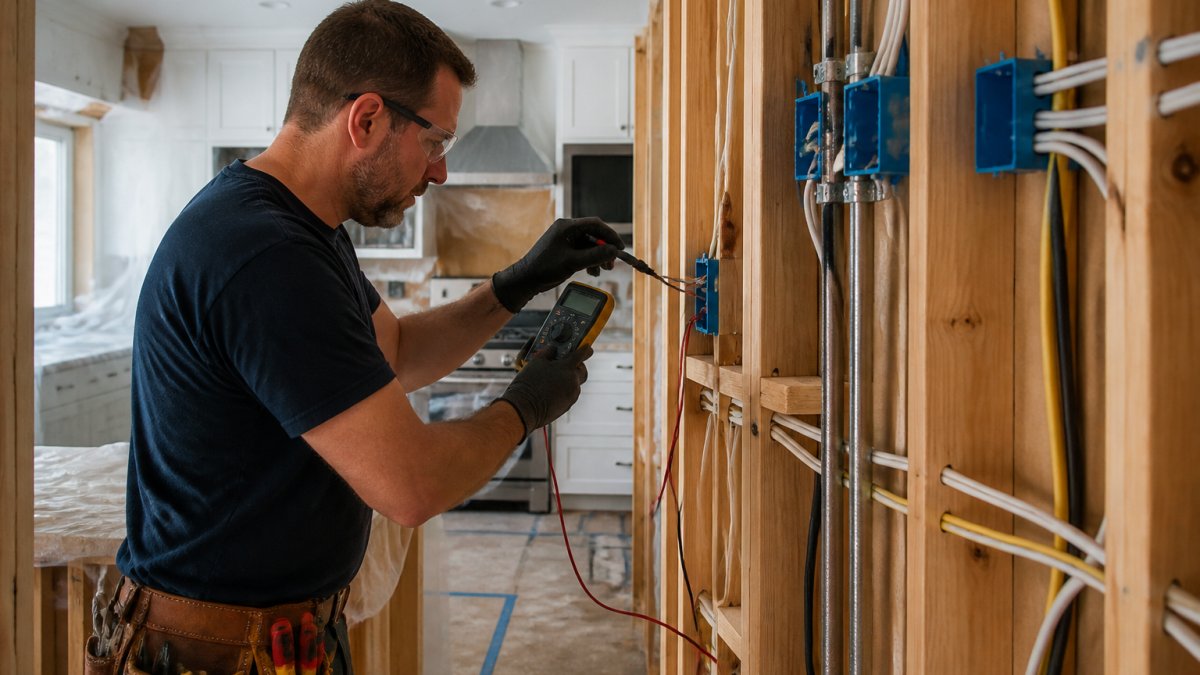
The first step is planning and design. Your licensed electrician for home remodeling will meet with you and your general contractor to discuss your needs.
Next comes the demolition phase. If you're removing old walls or cabinetry, the electrician may need to safely disconnect and remove old wiring. This is where experience matters, they know how to identify live circuits, safely turn them off, and remove old wiring without creating hazards.
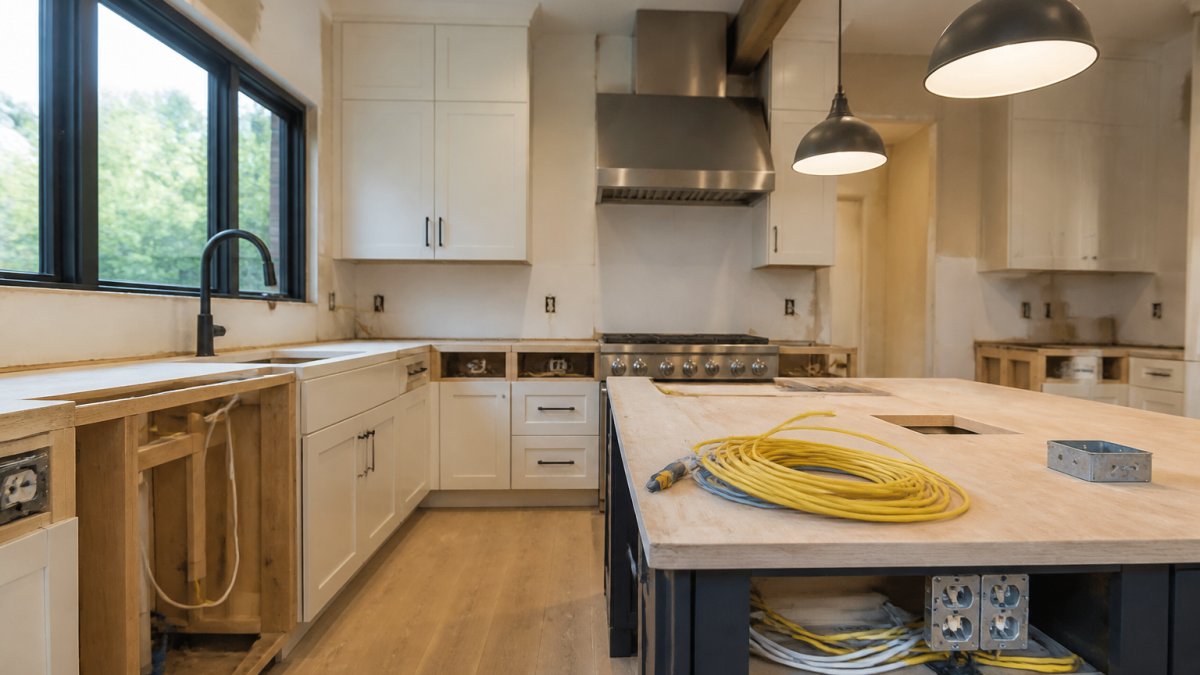
After demolition, the electrician runs new wiring. In a kitchen remodel, this means installing circuits for the range, refrigerator, dishwasher, and countertop outlets. In a bathroom, it means new circuits for exhaust fans, lighting, and outlets.
Then comes the installation of outlets, switches, and fixtures. Once the walls are ready, the electrician installs outlet boxes, switches, and light fixtures. This happens before drywall goes up so everything is accessible and properly secured.
Finally, the electrician tests everything and coordinates with the building inspector. They'll verify that all circuits work correctly, that grounding is proper, and that the work meets code. The inspector will come out to verify compliance before you can close up walls or move forward with other trades.
Understanding Electrical Permits for Home Remodeling
Permits exist for one reason: to ensure electrical work is done safely and meets code requirements. Your licensed electrician for home remodeling should be comfortable working with the permit process.
Request a Project Consultation →
Most jurisdictions require permits for any electrical work beyond replacing a light fixture or outlet. Kitchen remodels, bathroom remodels, new circuits, service upgrades, and any work involving rewiring almost always need a permit. The permit process typically involves submitting plans, paying a fee, and scheduling an inspection after the work is complete.
Your electrician should handle the permit application or at least guide you through it. Some include this in their estimate; others charge separately. Either way, make sure you understand what's required in your area before work begins. Your local building department can tell you what permits you need.
The inspection is the critical part. An inspector will verify that the work meets the National Electrical Code and local amendments. They'll check that circuits are properly sized, that grounding is correct, that outlets are in the right locations, and that all connections are secure and safe.
Working without a permit is tempting when you want to save money, but it creates serious problems. Your home won't pass a future inspection if you sell it, your insurance won't cover electrical damage or injuries, and you could face fines from your local building department. A licensed electrician for home remodeling will insist on permits because they protect everyone involved.
Kitchen and Bathroom Electrical Upgrades
These two rooms have unique electrical demands that your licensed electrician for home remodeling needs to understand.
Kitchen electrical upgrades typically focus on appliance circuits and countertop outlets. Modern kitchens need dedicated circuits for the range, refrigerator, and dishwasher. Countertop outlets should be spaced so you're never more than 6 feet from an outlet, this is both convenient and code-required.
Many older kitchens have inadequate electrical capacity. If you're upgrading to new appliances or adding more circuits, your home's service panel might need an upgrade. This is where a licensed electrician for home remodeling earns their expertise, they'll calculate your electrical load and recommend whether a service upgrade is necessary.
Bathroom electrical work centers on safety and moisture protection. All bathroom outlets need GFCI (ground fault circuit interrupter) protection, which detects electrical faults and cuts power instantly. This prevents electrocution if water contacts an outlet. Bathroom lighting should be on a separate circuit from outlets so you're not left in the dark if an outlet trips.
Exhaust fans are often overlooked but important. A properly sized and installed exhaust fan removes moisture that can damage walls and create mold. Your electrician will ensure the fan is on its own circuit and vented properly to the outside.
If you're planning a bathroom or kitchen remodel, work with your licensed electrician for home remodeling early in the planning process. They can identify what upgrades you need and factor those into your timeline and budget.
Protecting Yourself: Licensing, Insurance, and Project Coordination
Hiring a licensed electrician for home remodeling is just the start. You also need to protect yourself throughout the project.
Require proof of licensing and insurance before work begins. Get a copy of their current license and a certificate of insurance showing both general liability and workers' compensation coverage. Don't let anyone start work without these documents in hand.
Get everything in writing. Your estimate should detail what work is included, what's not, and what the cost is. A signed contract should include the scope of work, timeline, payment schedule, and what happens if changes are needed. This protects both you and the electrician if disagreements arise.
Coordinate with your general contractor. If you're using a contractor like Schatz Construction for your overall remodel, make sure your electrician and general contractor communicate regularly. Electrical work needs to happen at the right time in the sequence, and delays in one area affect everything else.
Schedule inspections promptly. Once electrical work is complete, contact your local building department to schedule the inspection. Don't proceed with other work until the electrical inspection passes. This protects you from discovering problems later when they're expensive to fix.
Keep records of everything. Save your permits, inspection reports, invoices, and warranty information. If you ever sell your home, these documents prove that electrical work was done properly and to code.
Hiring a licensed electrician for home remodeling protects your home, your family, and your investment. If you're planning a remodel and need guidance on electrical upgrades, contact Schatz Construction for a consultation.
Frequently Asked Questions
What is the difference between a licensed electrician and a certified electrician?
A licensed electrician has met state requirements, passed exams, and holds a current license issued by the state electrical board. Certification often refers to specialized training in specific areas like solar installation or smart home systems. For home remodeling, a state-licensed electrician is what you need, they're legally authorized to perform electrical work and understand code compliance. Always verify current licensing status with your state's licensing board before hiring.
When does a home remodeling project require a licensed electrician?
Any electrical work beyond replacing a light fixture or outlet typically requires a licensed electrician. This includes rewiring, adding circuits, upgrading your service panel, installing new lighting, adding outlets, or modifying existing wiring during kitchen or bathroom remodels. Electrical code requires licensed professionals to handle these tasks to ensure safety and code compliance. If you're unsure whether your project needs one, consult with a licensed contractor before starting work.
What should I ask an electrician before hiring them for my remodel?
Ask about their license status, insurance coverage, how they estimate project costs, their timeline, and whether they handle permits and inspections. Request references from recent remodeling projects and ask how they coordinate with other trades on site. Clarify who is responsible for obtaining permits and scheduling inspections. A professional electrician should answer these questions confidently and provide documentation of licensing and insurance without hesitation.
How do I know if an electrician is licensed and properly insured?
Request a copy of their current license and ask for proof of liability insurance and workers' compensation coverage. You can verify their license status through your state's electrical licensing board or contractor board website. Licensed and insured electricians should provide this documentation readily. Never hire an electrician who won't provide proof, it protects you from liability if something goes wrong and ensures the work meets code requirements.
