Verify Electrical Work Code Compliance: A Homeowner's Guide
Table of Contents
- Why Verifying Electrical Work Code Compliance Matters
- Understanding the Electrical Permit and Inspection Process
- Creating an Electrical Inspection Checklist for Homeowners
- Verifying Licensed Electrician Credentials and Permits
- Understanding Your Electrical Inspection Report and Correction Notice
- Common Electrical Code Violations and How to Identify Them
- Documentation and Next Steps After Verification
- Frequently Asked Questions
Last Updated: October 18, 2026
Why Verifying Electrical Work Code Compliance Matters
Electrical work is not something to guess about. A mistake can create fire hazards, shock risks, or damage to your home, which is why electrical work code compliance exists.
When you hire someone, you need to know the work follows local electrical codes, which set safety standards for wiring, circuits, and panels.
At Schatz Construction, we understand homeowners want assurance their electrical work meets code. The permit and inspection process is how your community ensures safety.
Understanding the Electrical Permit and Inspection Process
What Permits Cover and Why They're Required
An electrical permit is your community's way of tracking and approving electrical work. Permits cover new circuits, panel upgrades, outlets and switches, lighting fixtures, rewiring, and new service.
Permits are required because electrical work done wrong causes fires and injuries. They ensure licensed electricians do the work and inspectors verify it meets code.
Some homeowners skip permits to save time or money, which creates serious problems.
Inspection Stages and Timeline
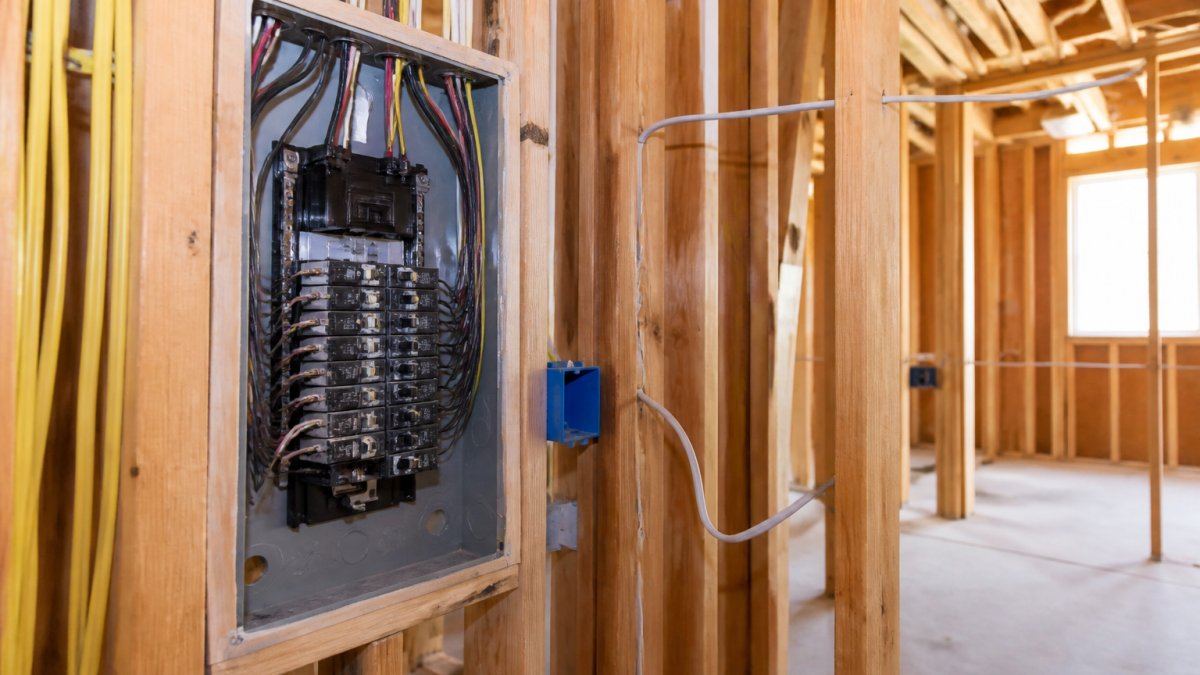
Stage 1: Rough-In Inspection This happens after the electrician installs wiring and boxes but before drywall covers them. The inspector checks that wiring is properly routed, secured, and protected, catching problems before they're hidden.
Stage 2: Final Inspection After outlets, switches, and fixtures are installed, the inspector tests circuits, checks grounding, and verifies everything works safely. Only after passing can the system be used.
Creating an Electrical Inspection Checklist for Homeowners
What follows is a practical, ordered checklist to confirm completed electrical work matches what was permitted and what the code requires. It separates what a homeowner can safely check from what requires a licensed electrician or the authority having jurisdiction (AHJ), the local office that enforces the code.
Step 1: Confirm the Paper Trail First
Before you look at a single wire, verify the administrative side, the part most homeowners skip and inspectors check first.
- Permit on file. Confirm the permit number matches the address and scope of work. A permit for a panel upgrade does not cover new kitchen circuits.
- Approved scope. Work outside the approved scope is unpermitted even if a permit exists.
- Contractor credentials. Confirm the license is active and the type matches the work.
- Inspection history. Ask for the rough-in result before drywall goes up. If rough-in was never inspected, the final inspection cannot verify what's behind the wall.
Step 2: Visual Checks a Homeowner Can Safely Perform
These checks require no tools and no opening of panels or boxes.
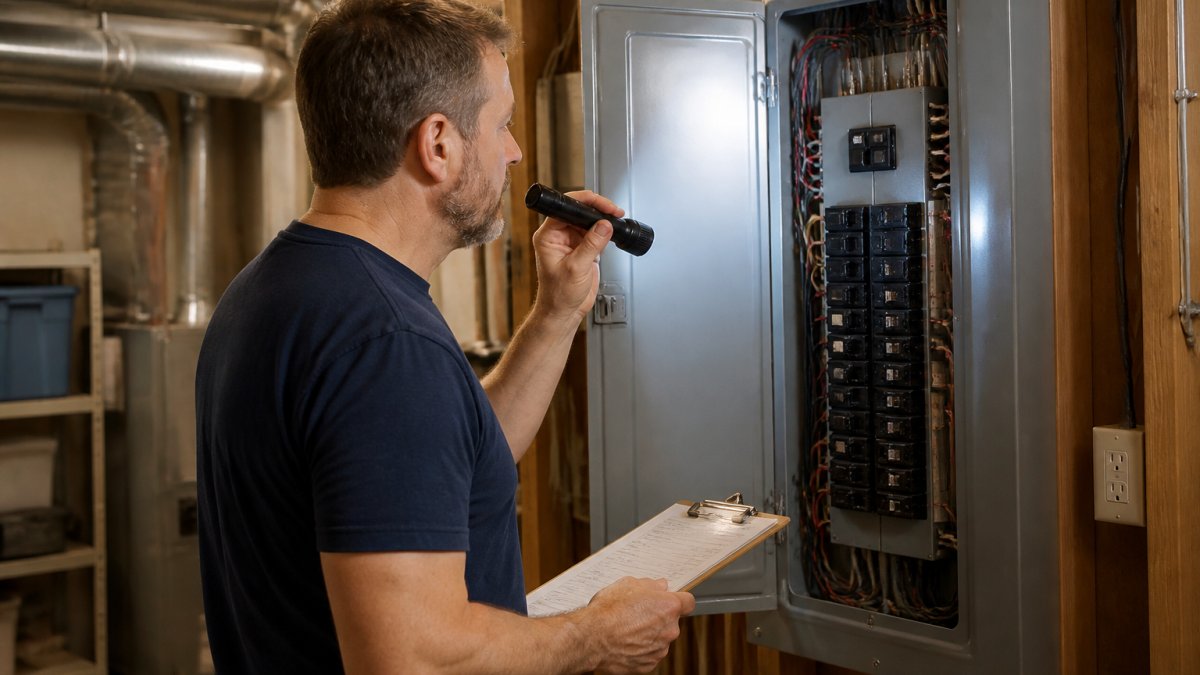
At the panel (door open, cover on): Breakers are labeled clearly and match the rooms they control.
At outlets and switches: No cracked, loose, or wobbly devices, and none that feel warm to the touch.
At light fixtures: Fixtures are securely mounted with no exposed wiring at the connection, and none installed without a proper electrical box behind it.
Step 3: Tests That Require an Electrician or Inspector
These checks confirm code compliance and require instruments and training. A homeowner should not attempt them.
- GFCI trip test with a tester. Confirms the device trips at the correct threshold, not just that the button works.
- Continuity and grounding test. Confirms the ground path is continuous from outlet to panel.
- Voltage drop measurement. Confirms circuits are not overloaded by long runs or undersized wire.
- Breaker-to-wire sizing check. Confirms the breaker amperage matches the wire gauge, such as a 20-amp breaker on 12-gauge wire.
- Torque check on panel terminations. Loose terminations are a leading cause of panel fires and are invisible without a torque screwdriver.
- AFCI and GFCI protection verification for the rooms where the current code edition requires them.
Step 4: Match Findings to the Code Edition in Force
Code requirements change between editions, and your jurisdiction may adopt amendments. Before concluding work is non-compliant, confirm which edition your AHJ enforces and whether local amendments apply. The permit and inspection record is the authoritative answer.
Step 5: Decide Whether to Escalate
If your visual checks turn up any of the following, stop using the circuit and call a licensed electrician before proceeding:
- Warm outlets, burning smells, or frequent breaker trips
- Scorching at the panel or at any device
- Missing GFCI protection in wet areas
- Two-prong outlets in kitchens, bathrooms, garages, or outdoors
- Any wiring you cannot see the full run of
For everything else, the inspection report from your AHJ confirms compliance. Use the checklist to prepare for that inspection, not to replace it.
Verifying Licensed Electrician Credentials and Permits
Before hiring an electrician, verify they're qualified. This protects you legally and ensures quality.
Check licensing status. Contact your local electrical board, which maintains a public database.
Ask for proof of insurance. Licensed electricians carry liability insurance. Request a certificate to protect you if someone is injured or property is damaged during work.
Verify bonding.
Get the permit number. Before work starts, confirm the electrician pulled the required permit.
Review past work. Ask for references from recent projects and whether any issues came up during inspection.
Understanding Your Electrical Inspection Report and Correction Notice
An inspection report is not a pass/fail grade. It's a record of what the inspector observed against the code edition in force, and knowing how to read it turns a failed inspection into a closed permit.
Reading the Report: Three Categories of Findings
1. Passed items. These meet the code edition in force. No action needed, but keep the record as evidence of compliance.
**2.
Request a Project Consultation →
3. Stop-work or unsafe conditions. Findings the inspector flags as hazardous, exposed live conductors, a double-tapped breaker with evidence of overheating, or a panel with no working main disconnect.
Read the report for the specific code section cited next to each finding. That citation tells your electrician exactly what standard the inspector applied.
The Corrective-Action Workflow
When violations are listed, follow this sequence. Skipping a step is the most common reason a reinspection fails again.
- Get the correction list in writing. The report itself is the list. If the inspector gave verbal guidance, ask for it in writing so the electrician and inspector work from the same document.
- Assign responsibility. If you're correcting someone else's work, get a written scope from the new electrician first.
- Correct, then self-verify. Before calling for reinspection, the electrician should re-test the corrected items (GFCI trip test, torque check, continuity) so the reinspection is a confirmation, not a discovery.
- Document each correction. Photograph the corrected work before it's covered, note the test readings, and keep the correction list with the photos.
- Request reinspection. Provide the permit number and the violation notice number. The inspector returns to verify the specific items listed.
- Close the permit. Only after the final approval is issued is the work legally complete. A passed rough-in is not a closed permit.
Interpreting Test Results and Acceptance Criteria
A report may include test readings. Here's how to read the common ones.
- GFCI trip time.
- Ground continuity.
- Breaker-to-wire match.
- Torque values.
If a reading is borderline, ask the inspector to clarify the acceptance criterion they applied.
Documenting Verification and Retaining Evidence
The inspection record is only as good as what you keep. Build a project file with:
- The original permit application and the approved scope
- Rough-in and final inspection reports
- Every correction notice and the documentation of each correction
- Photographs of the work before it was covered
- Test readings recorded by the electrician
- The final approval or certificate of compliance
Store this with your home records. It's the evidence you'll need if you sell, file an insurance claim, or need to prove the work was permitted and inspected.
When Work Fails Inspection and the Cause Is Unclear
Sometimes a reinspection fails because the correction addressed the symptom but not the cause, such as replacing a tripping breaker without checking the circuit load. Ask the inspector to identify the specific code section and condition observed; a written finding is easier to correct than a verbal one. If the finding involves work outside the original permit scope, you'll need a permit amendment first.
Common Electrical Code Violations and How to Identify Them
Certain violations appear repeatedly. Knowing what they look like helps you spot problems.
Improper wire sizing happens when wire is too small for the circuit.
Missing GFCI outlets in bathrooms and kitchens is a common violation. GFCI outlets have test and reset buttons and protect against shock.
Exposed wiring in basements or attics violates code.
Improper outlet spacing means outlets are too far apart.
Inadequate grounding at outlets creates shock risk.
Double-tapped breakers happen when two wires connect to one breaker.
Incorrect breaker sizing means the breaker doesn't match the wire gauge.
Documentation and Next Steps After Verification
After your electrical work passes inspection, document everything. This record protects you.
Get a certificate of compliance. Some jurisdictions issue this after final inspection as official proof the work meets code.
Photograph the work. Take photos before it's covered by drywall or finished.
Report the work to your insurance company.
Schatz Construction can help coordinate electrical work as part of your home renovation or remodeling project.
Verifying that electrical work meets code protects your family and your home.
Frequently Asked Questions
How can I verify that electrical work was permitted and inspected?
Contact your local building department or code enforcement office and provide the property address and the date the work was completed. They can confirm whether a permit was issued, inspections were scheduled, and whether the work passed final inspection. Request copies of the permit and inspection reports. If no record exists, the work may not have been permitted, which is a serious code compliance issue that should be corrected immediately.
What should I look for during a visual inspection of electrical work?
Check that all wiring is properly secured and protected inside walls or conduit, outlets and switches are properly grounded, the electrical panel is accessible and clearly labeled, breakers match the wire gauge they protect, and there are no exposed connections or loose wires. Look for burn marks, discoloration, or signs of overheating around outlets and panels. If you're unsure about any installation, hire a licensed electrician to perform a thorough inspection rather than attempting to diagnose complex issues yourself.
What documents should I keep after electrical work is completed?
Keep the original permit, all inspection reports (including the final approval), the contractor's invoice and warranty information, and any certificates of compliance or inspection certificates issued by the local authority. Store these documents with your home's other records. If you sell your home, these documents prove that electrical work was done legally and to code, which protects your liability and supports your property's value.
What happens if electrical work fails inspection?
The inspector will issue a correction notice detailing what does not meet code. The contractor must correct the violations and request a reinspection at no additional cost if the work was originally permitted. Do not use the electrical system until corrections are made and reinspection passes. If the original contractor is unavailable, hire a licensed electrician to make the corrections and coordinate the reinspection with your local building department.
