Which Bathroom Vanity Material Lasts in Humid Rooms?
Quick Summary
Marine-grade plywood and quality PVC are the strongest choices for humid bathroom vanity materials, since both resist swelling far better than standard MDF. Solid wood can also perform well if its finish stays intact and every edge is sealed. Ventilation and sealed cut-outs matter nearly as much as the panel material itself.
- Plywood resists swelling better than MDF because its layered construction holds its shape when water reaches the edges.
- PVC does not absorb water and resists mold, making it well suited to basements and high-moisture areas.
- Seal cut edges and the sink opening, since exposed edges are where water enters first.
- Run the exhaust fan for 15 to 20 minutes after a shower and vent it outside.
- Fix slow leaks promptly, because they saturate the base panel before anyone notices.
Table of Contents
- Why Humidity Is Hard on Bathroom Vanities
- Best Bathroom Vanity Materials for Humid Environments Compared
- MDF vs. Plywood Bathroom Vanity: Which Holds Up Better?
- Is a PVC Bathroom Vanity a Good Choice for Humid Bathrooms?
- Bathroom Cabinet Finishes for Steam: What Resists Best
- How to Protect Bathroom Cabinets from Moisture
- Choosing the Right Vanity for Your Bathroom and Budget
- Frequently Asked Questions
Last Updated: November 12, 2026
Humidity is one of the hardest conditions a bathroom vanity faces. Steam settles into cabinet boxes, doors and drawer fronts, and water from the sink finds every seam. Choosing the right bathroom vanity materials for humid environments is one of the most practical decisions a homeowner can make during a remodel, because the wrong choice can swell, warp or peel within a few years.
No material is immune to moisture, but some hold up far better than others. The right pick depends on how much water your bathroom sees and how well it is ventilated.
Why Humidity Is Hard on Bathroom Vanities
Moisture damages cabinets in a few distinct ways, and each calls for a different kind of protection.
Humidity exposure, splashes, standing water, and leaks
Ambient humidity is the slowest threat: warm, damp air builds up and is absorbed by wood fibers and particleboard cores, causing gradual swelling. Splashes are localized but daily, and dry unevenly if not wiped up.
A material that handles humidity well may still fail under standing water. When comparing options, ask which of these conditions your bathroom faces most often.
Best Bathroom Vanity Materials for Humid Environments Compared
Here is how the most common materials perform in wet conditions:
| Material | Moisture Resistance | Main Weakness | Typical Use |
|---|---|---|---|
| Solid wood | Moderate, if sealed | Swells and cracks if finish fails | Premium, custom vanities |
| Plywood (marine-grade) | High | Higher cost, edges need sealing | Humid bathrooms, long-term use |
| MDF (moisture-resistant) | Moderate | Swells at edges if water reaches the core | Budget-conscious remodels |
| PVC | Very high | Limited style range | Basements, powder rooms, high-moisture areas |
| Thermofoil and laminate | Moderate | Surface can peel at seams | Lower-cost, easy-to-clean fronts |
Solid wood looks the most attractive, but it moves with humidity. Teak and some oak species resist moisture better than softer woods, yet even these need a quality finish.
Marine-grade plywood and quality PVC cabinets are commonly chosen for high-humidity bathrooms, and solid wood can work well if the finish is maintained. Pricing depends on quantity, dimensions, finish and delivery, so ask for a quote tailored to your bathroom.
MDF vs. Plywood Bathroom Vanity: Which Holds Up Better?
Plywood generally holds up better in humid bathrooms. Its cross-laminated layers resist the swelling that causes MDF to lose its shape.
MDF has real advantages in cost and in producing smooth painted surfaces. For a powder room with good ventilation, a moisture-resistant MDF vanity may serve well. For a primary bathroom with a shower, plywood is usually the safer investment.
Is a PVC Bathroom Vanity a Good Choice for Humid Bathrooms?
Yes, for most humid bathrooms PVC is an excellent choice. PVC does not absorb water and will not swell or rot when splashed or briefly flooded.
The trade-off is style. PVC cabinets come in a more limited range of finishes and door profiles, and some homeowners find the look less refined. Hardware attachment can also differ, so confirm the cabinet design suits your fittings.
Bathroom Cabinet Finishes for Steam: What Resists Best
The finish is the first line of defense against steam, but it only works if it is the right chemistry and covers every surface, including the back, the inside of the cabinet box, and the cut edges around the sink opening. Finish failures often result from a finish applied too thin, skipped on an edge, or never maintained.
How the main finish types perform under steam
- Water-based polyurethane. Good clarity and low odor, and it resists household humidity well when applied in multiple coats. It is softer than conversion varnish, so it is more prone to scratching around pulls and drawer fronts. Expect to touch up high-use areas periodically.
- Catalyzed conversion varnish. A two-part finish that cures hard and resists moisture, heat and common household chemicals better than most single-component products. It is the finish many custom cabinet shops use for bathroom vanities. The trade-off is that it is typically sprayed in a shop, not brushed on site, so it suits new cabinetry more than refinishing an existing vanity.
- Moisture-cured urethane. Very durable and water-resistant, but it has a strong solvent odor and a short pot life, which makes it a shop-applied finish for most homeowners. It can amber over time, which matters on light-colored woods.
Why edge sealing matters as much as the finish name
A finish that stops at the face of the door leaves the panel edges, the sink cut-out, and the drawer box edges exposed.
Watch out: caulk around the sink and backsplash will eventually crack, letting water migrate behind the vanity top and sit against an unsealed edge. Our guide to floor tiles that handle water near the cabinet base covers protection from below as well.
Maintenance and repair by finish type
- Clear wood finishes. Wipe the vanity dry after splashes, and inspect annually for dull patches, hairline cracks, or lifting at seams. A light scuff and recoat on high-use areas restores the film before water reaches the wood.
- Painted finishes. Touch up chips promptly with the same enamel, and check the seams at the door edges and around the sink. Paint that has cracked along a seam should be cut back and resealed, not just painted over.
- Laminate and thermofoil. Clean with a damp cloth and avoid abrasive pads that can lift the edge. If a corner lifts, a small amount of contact adhesive and a clamp can re-bond it, but once water has swollen the core behind the film, the panel usually needs replacement.
- Solid wood. Even well-finished wood moves with seasonal humidity. Keeping the bathroom ventilated and the finish intact matters more than any single product choice.
In a shower-heavy bathroom, a finish that handles steam without yellowing or clouding over the years is worth paying more for. The practical test is not the label on the can but whether the finish is complete, correctly applied, and maintained.
How to Protect Bathroom Cabinets from Moisture
Good material choice only works if the cabinet is also built and maintained well. Protection comes down to three things: keeping water away from vulnerable edges, removing humid air before it settles into the cabinet, and catching small failures before they become panel replacements.
Build quality: where vanities actually fail
The named panel material gets most of the attention, but the failure points are usually construction details. When you compare cabinets or review a quote, look for these:
- Sealed edges everywhere, including cut-outs. Exposed particleboard and MDF edges are where most failures begin. Seal around the sink opening, the drawer cut-outs and the cabinet base. A raw edge under the sink is the single most common path for water into the core.
- A finished cabinet back and a moisture-resistant base panel. A solid back and a base panel that resists water reduce the risk of damage from below, where slow leaks and floor moisture go unnoticed.
- Joinery that limits water paths. Dado and rabbet joints, glued and sealed, leave fewer open seams than butt joints held with fasteners alone. Drawer boxes with sealed bottoms and backs hold up better than open-bottom boxes.
- Stainless or coated hardware. Confirm that hinge and slide hardware is rated for damp locations.
Ventilation and humidity control
An exhaust fan that runs during and after showers removes most of the moisture that reaches the cabinets. Vent it outside, not into the attic, and confirm the fan is sized for the room and actually moves air, a fan that is undersized or clogged with dust does little. Run the fan for 15 to 20 minutes after a shower, and leave the door open afterward so humid air can escape.
Maintenance and damage repair
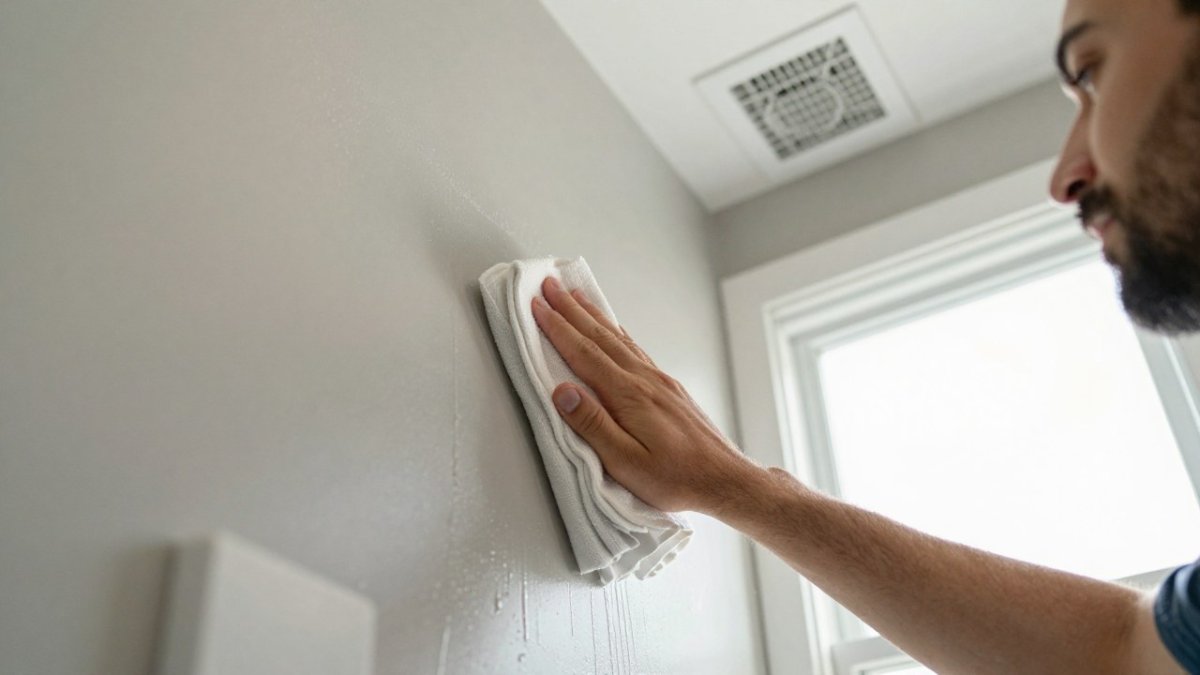
- Wipe up standing water promptly (the EPA). Dry the vanity top and front after splashes, and check under the sink regularly for slow drips.
- Inspect and reseal periodically. On wood and painted finishes, look for hairline cracks, lifting edges or dull patches each year, and touch them up before water gets underneath.
- Address swelling early. If an edge has swelled, the panel will not return to its original shape on its own. Drying the area and sealing the edge can stop the damage from spreading, but a badly swollen panel usually needs replacement.
- Fix leaks at the source. A slow supply-line or drain leak is the most destructive moisture problem because it saturates the base panel and subfloor before anyone notices. Check under the sink monthly and after any plumbing work.
Lifecycle cost and repairability
Upfront price is only part of the picture. A vanity that lasts longer and can be refinished or repaired usually costs less over time than a cheaper cabinet that has to be replaced. Solid wood and plywood vanities can often be sanded and refinished, and damaged doors or drawer fronts can be replaced individually.
If you are planning a full bathroom renovation, Schatz Construction can walk you through material options, cabinet construction details and how each choice fits your layout. Our bathroom remodeling services are designed around the moisture conditions in your specific home, and you can contact us for a consultation to talk through the right vanity for your space.
Choosing the Right Vanity for Your Bathroom and Budget
Start by identifying your bathroom's real moisture profile. A guest powder room with a window and a fan can use a different material than a primary bath with a large walk-in shower and no window.
For a primary bathroom you plan to keep for many years, marine-grade plywood or a quality PVC vanity usually offers the best balance of moisture performance and longevity.
Remodel timing matters too. If you are ready to hire help, see our tips on choosing custom bathroom renovation contractors. Our article on how long a bathroom renovation really takes can help you plan the schedule. Our bathroom remodeling services are designed around the moisture conditions in your specific home, and you can contact us for a consultation to talk through the right vanity for your space.
Frequently Asked Questions
What material is best for a bathroom vanity in a high-humidity room?
Moisture-resistant options perform best in humid rooms. Marine-grade plywood and moisture-resistant MDF are common choices because they handle moisture better than standard MDF or particleboard. Solid wood can work when it is sealed well, but it expands and contracts with humidity, so it needs a durable finish and good ventilation. PVC and thermofoil are waterproof in their surface layers, though their edges and joints still need proper sealing. Schatz Construction can help you compare options for your specific bathroom layout.
Is MDF or plywood better for a bathroom vanity?
Plywood generally handles moisture better than standard MDF. MDF is made from wood fibers bonded with resin, and it swells and loses strength when water soaks into its edges. Plywood is built from layered veneers, so it resists swelling and holds screws well. Moisture-resistant MDF narrows the gap, but exposed edges still need sealing. For bathrooms that see regular splashes or steam, plywood with a sealed finish is usually the safer choice.
Do thermofoil bathroom cabinets hold up to steam?
Thermofoil holds up reasonably well to steam because its vinyl surface resists moisture. The weak point is usually the seams and edges, where water can get behind the film and cause it to peel or lift over time. Good ventilation and prompt repair of any chipped edges extend the life of thermofoil cabinets considerably.
How can I protect a bathroom vanity from moisture damage?
Run the exhaust fan during and after showers, wipe up standing water promptly, and check the sink connections and the area under the basin for slow leaks. Seal exposed edges and seams with a moisture-resistant sealant, and reapply protective coatings on painted or stained surfaces as the manufacturer recommends. Keep the cabinet base dry and make sure the vanity is installed level so water does not pool. Small habits like these help a vanity last much longer in a humid room.

