5 Best Bathroom Floor Tiles for Small Rooms
Quick Summary
The best bathroom floor tiles for small rooms are large-format porcelain, small-format ceramic mosaic, honed marble or travertine, penny-round or hexagon tile, and luxury vinyl tile. Large-format porcelain suits most small bathrooms because fewer grout lines make the floor read as one continuous surface.
- Large-format porcelain needs a flat, well-prepared subfloor and careful cutting around toilets and vanity legs.
- Small mosaics add grip and follow the floor's slope to a drain, so they work well on shower floors.
- Honed marble and travertine look high-end but need sealing and regular care.
- Luxury vinyl tile is warm and quiet, but choose a waterproof product with proper seams and sealing.
- Matching grout closely to the tile makes a small room feel larger.
Table of Contents
- Why Tile Choice Matters More in a Small Bathroom
- Our Top 5 Bathroom Floor Tiles for Small Rooms
- Best Tile Size for a Small Bathroom
- Bathroom Floor Tile Patterns for Small Spaces
- Slip-Resistant Bathroom Floor Tile: What to Look For
- Easy-to-Clean Bathroom Flooring and Upkeep
- Planning Your Small Bathroom Floor With Schatz Construction
- Frequently Asked Questions
5 Best Bathroom Floor Tiles for Small Rooms
Last Updated: October 30, 2026
Why Tile Choice Matters More in a Small Bathroom
Floor tile does more work in a small bathroom than in almost any other room. It sets the visual size of the space, handles constant moisture, and has to stay safe when wet.
The right bathroom floor tiles for small rooms do three things well. They make the floor appear larger, they resist water and daily wear, and they give you secure footing when the floor is wet. Get one of those wrong and the whole room suffers.
Small bathrooms leave little margin for error. Before choosing tile, you can plan a small bathroom layout to see how the room's size and fixtures affect your floor.
Our Top 5 Bathroom Floor Tiles for Small Rooms
Here is a ranked list of common options, based on how each performs in compact bathrooms: visual size, slip resistance, upkeep, and installation effort.
1. Porcelain Tile in Large Format
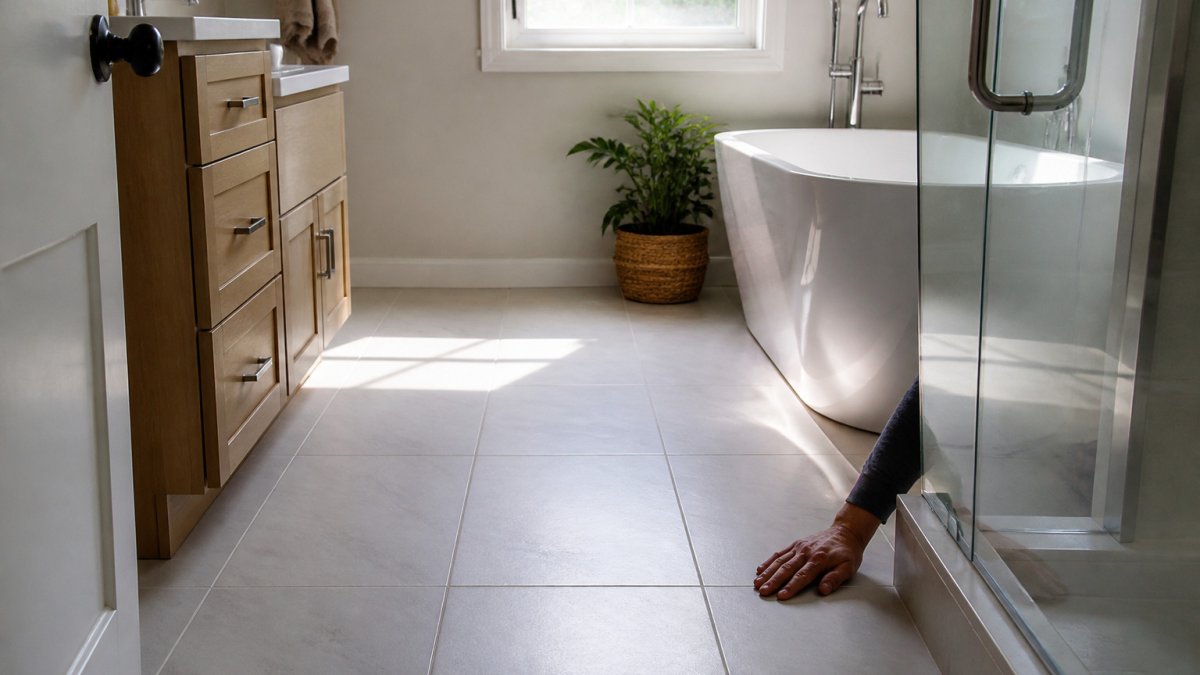
Large-format porcelain is a strong choice for most small bathrooms. Fewer grout lines mean a calmer floor that reads as one continuous surface.
The trade-off is installation. Large pieces need a flat, well-prepared subfloor, and they are harder to cut around toilets and vanity legs. Plan for that work before you order.
2. Ceramic Tile in Small-Format Mosaic
Small mosaics suit shower floors and bathrooms that need extra traction. More grout lines create more friction underfoot, which is why mosaics are common in wet zones.
In a small room, a full floor of mosaic can feel busy. Many homeowners use it only in the shower and choose a simpler tile for the rest of the floor.
3. Natural Stone Tile (Honed Marble or Travertine)
Honed marble and travertine offer a warm, high-end look. Honed finishes are safer underfoot than polished ones, which can turn slick when wet.
Natural stone needs sealing and regular care. It stains more easily than porcelain, and etching from common cleaners can dull the surface over time. It is a good choice when appearance comes first and you are willing to maintain it.
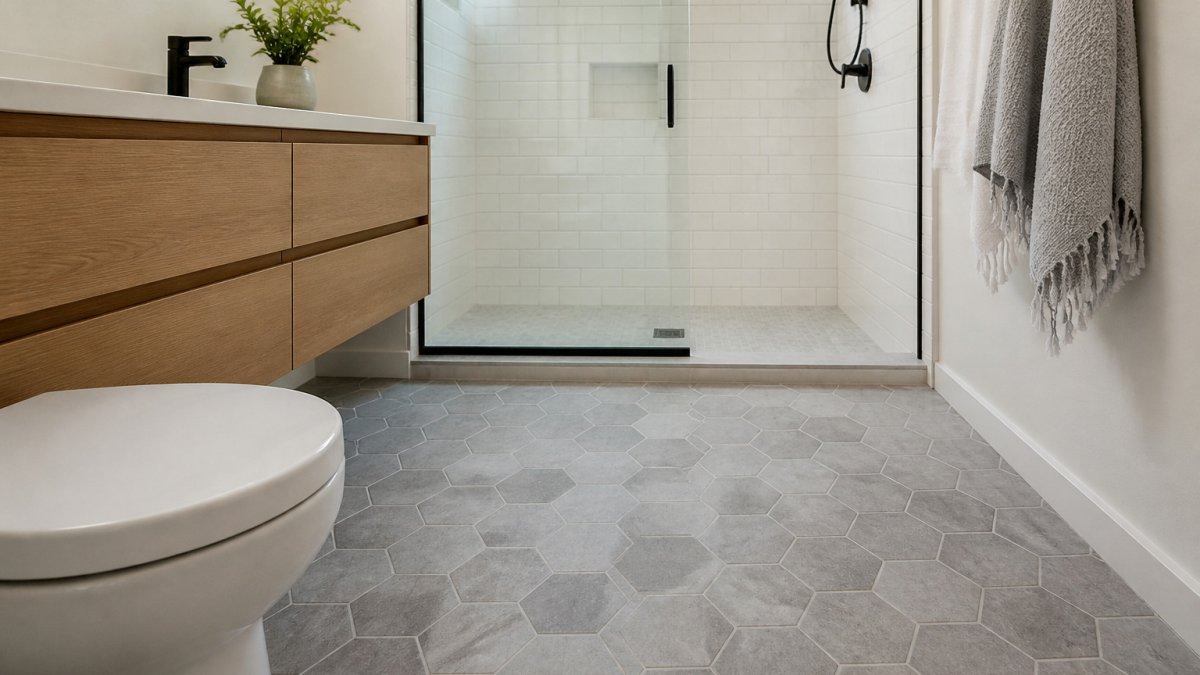
4. Penny-Round or Hexagon Tile
Penny-round and hexagon tiles add character and a classic feel. Their small shapes and built-in grout pattern give good grip, so they work well on shower floors and in wet areas.
Pattern-heavy tile can make a small room feel busier. Keep the color palette tight and let the shape do the work.
5. Luxury Vinyl Tile
Luxury vinyl tile (LVT) is the most forgiving option. It is warm underfoot, quieter than tile, and comfortable to stand on.
Vinyl is not as durable as porcelain over the long term, and it can be damaged by standing water or heat if the installation is poor.
Here is how the five most common options compare for compact bathrooms.
| Tile | Best for | Key difference |
|---|---|---|
| Large-format porcelain | Most small bathrooms | Fewer grout lines; needs flat subfloor |
| Small-format ceramic mosaic | Shower floors, extra traction | Follows drain slope; can feel busy |
| Honed marble or travertine | High-end look | Needs sealing and regular care |
| Penny-round or hexagon | Wet areas, classic feel | Good grip; keep palette tight |
| Luxury vinyl tile | Warm, quiet, forgiving install | Less durable long term; choose waterproof |
Best Tile Size for a Small Bathroom
Tile size affects how large the room feels, how easy the floor is to clean, and how much labor the installation takes. In a small bathroom, those three factors pull in different directions, so the right choice is a balance rather than a single "best" size.
How size changes the look of a small room
Fewer grout lines read as a more continuous surface, which makes a compact floor feel calmer and larger. That is why 12 by 24 inch and 24 by 24 inch tiles are common choices for small bathroom floors.
Smaller tiles have their place. On shower floors and near the tub, smaller tiles and mosaics improve grip and let the installer follow the floor's slope to the drain.
The installation trade-offs nobody mentions
Large-format tile is not simply "bigger and better." It comes with real costs and constraints:
- Subfloor flatness, Large tiles need a flatter, well-prepared subfloor. Small dips and humps that a mosaic would follow can cause lippage (uneven edges) with large pieces.
- Cutting complexity, Cutting large tile around a toilet flange, vanity legs, and door jambs takes more skill and produces more waste.
- Deflection, Floors must be stiff enough for the tile size; a bouncy subfloor can crack large tiles.
Smaller tiles are more forgiving of an imperfect subfloor and easier to cut, but they mean more grout lines to clean and more labor to set. Ask your installer which size suits your actual subfloor before you fall in love with a look.
Grout lines: the detail that decides the look
Grout width and color do as much visual work as the tile itself:
Request a Project Consultation →
- Narrow joints keep the floor looking seamless and make the room feel larger.
- Wider joints add traction and hide minor irregularities, which helps on older floors.
- Grout color close to the tile makes the floor read as one surface, the most reliable trick for making a small room feel bigger.
A stain-resistant grout is worth considering in any bathroom, and light-colored grout shows dirt sooner than mid-tone or dark grout.
Lighting and layout change the perceived size
Tile size does not work alone. A lightly colored floor with matching grout and good lighting reads larger than the same tile under dim light. Running a rectangular tile's long edge along the room's length can make a narrow bathroom feel longer. Before you order, look at the tile under the room's actual lighting, not just showroom lights, and consider how the layout will meet the walls and fixtures.
A practical rule of thumb
For most small bathrooms, start with a matte or honed large-format tile on the main floor, match the grout closely to the tile, and use a smaller mosaic only in the shower. Confirm the subfloor is flat and the floor is stiff enough before committing to large pieces, and let your installer weigh in on cutting and layout before you buy.
Bathroom Floor Tile Patterns for Small Spaces
Patterns can add interest, but in a small bathroom they need to be used with care. Herringbone and subway layouts add movement and direction, which can make a narrow room feel longer if you run the lines along the room's length.
Diagonal layouts can make a square room look more dynamic, though they add cutting waste and labor. Busy patterns such as large, high-contrast designs tend to shrink a small space.
Slip-Resistant Bathroom Floor Tile: What to Look For
Slip resistance is the single most important safety factor in a bathroom floor, and it is the one most often skipped when homeowners shop by looks. A glossy porcelain that feels fine in a showroom can become dangerously slick once bath water, soap, and humidity are in play. In a small bathroom, where you pivot and step in tight quarters, grip matters even more.
Understand the DCOF rating before you buy
The most useful number on a tile spec sheet is the Dynamic Coefficient of Friction (DCOF), measured by the ANSI A326.3 test method. This is the standard U.S. test for wet slip resistance on hard surface flooring. The Tile Council of North America (TCNA) recommends a DCOF of 0.42 or greater for level interior floors that may be walked on when wet, which describes virtually every bathroom floor.
Ask the manufacturer or your tile supplier for the DCOF value in writing. A tile that meets or exceeds 0.42 is a reasonable baseline for a bathroom floor. For shower floors and other constantly wet zones, many practitioners prefer a higher value or a textured surface, since the shower pan is wet far more often than the main floor.
Compare finishes realistically
Finish type is the quickest visual clue to grip:
- Polished and high-gloss finishes, the slickest when wet. Best avoided on bathroom floors, especially in small rooms where there is little dry standing area.
- Matte and honed finishes, noticeably more grip than polished, and a good default for the main floor.
- Textured and structured finishes, the most traction, but they trap soap scum and grout residue more readily, so they need more scrubbing.
Test a sample wet, not dry
A dry sample tells you almost nothing. Before committing to a full floor, take a sample tile home, wet it, and walk on it in shoes and bare feet. A common pattern is that a tile which feels grippy dry becomes noticeably slick with a thin film of water. This five-minute test catches more problems than any showroom display.
Match the tile to the household
Slip resistance is not one-size-fits-all. Households with young children, older adults, or anyone with mobility concerns should lean toward matte or textured finishes and mosaics in wet zones, and should avoid polished stone entirely. If the bathroom is used by someone who showers frequently or the floor stays damp, prioritize grip over gloss every time.
Grout and drainage are part of the safety picture
Grip is not only about the tile face. Wider grout joints add traction, and a properly sloped shower floor that drains fully reduces standing water. Ask your installer how the floor will shed water and whether the grout lines will add or reduce grip. A floor that pools water is a slip hazard no matter how good the tile rating is.
Easy-to-Clean Bathroom Flooring and Upkeep
Bathroom floors take constant abuse from water, soap, and grime. Porcelain is the easiest to maintain: it resists stains, does not need sealing, and cleans with ordinary products.
Natural stone needs periodic sealing and gentler cleaners to protect its finish. Grout needs attention too.
Ventilation affects how clean the floor stays (the EPA). A working exhaust fan reduces moisture buildup, which slows mildew and keeps grout looking fresh.
Planning Your Small Bathroom Floor With Schatz Construction
Choosing the right tile is only part of the job. You can also review our custom remodeling services to see how a full project is handled from start to finish.
If you are planning a bathroom project, our bathroom remodeling services can help coordinate floor, shower, and fixture work.
Before you start, it helps to plan the room's layout around the tile you choose. When you are ready to move forward, you can contact Schatz Construction for a consultation to talk through your options and the work involved.
Frequently Asked Questions
What size floor tile is best for a small bathroom?
In most small bathrooms, large-format tiles such as 600 × 600 mm or 300 × 600 mm reduce the number of grout lines, which makes the floor read as one continuous surface. Smaller tiles, such as 75 × 150 mm or mosaic sheets, work well in tight areas and on shower floors because they follow slopes more easily and offer more grout joints for grip. Choose the size based on the room's dimensions, the amount of cutting required, and whether the floor must also serve as a wet-area surface.
What tile pattern is best for a small bathroom floor?
Straight-lay patterns that run parallel to the longest wall tend to make a small bathroom look longer and more orderly. Diagonal layouts can add visual interest but also increase cutting waste and labor. Herringbone and subway layouts add texture but can feel busy in very small rooms, so they are best limited to a single accent area or kept in a neutral color. A simple, consistent pattern usually looks more spacious than a complicated one.
Can large tiles make a small bathroom look bigger?
Yes, when the room is not too small for the tile. Large-format tiles reduce visual breaks, and fewer grout lines help the floor appear continuous. Lighter colors and a low-contrast grout color further reduce the sense of division. However, very large tiles in a tiny room may require extra cutting around the toilet and vanity, so confirm fit with a layout plan before purchasing.
Which bathroom floor tiles are easiest to clean?
Glazed porcelain and glazed ceramic tile are among the easiest to clean because the sealed surface resists staining and wipes clean with a mild cleaner. Natural stone such as marble or travertine requires sealing and gentler cleaners to avoid etching. Luxury vinyl tile is also easy to maintain. Keep grout lines sealed and clean, since grout is usually the first place dirt and mildew collect.

